Siding and Exteriors
Hardie siding vs stucco in Arizona: an honest comparison
Stucco is the default exterior across most of Arizona, and for good reason. But more homeowners are asking whether James Hardie fiber cement siding makes sense on their house, including over concrete block. Here is how the two compare in our heat, our monsoons and our high country.
Siding and Exteriors · October 2026 · 8 min read
We install James Hardie fiber cement siding on homes from the Valley to the high country, including over concrete block, which surprises a lot of people. We also repair and work around plenty of stucco. Neither one is the right answer for every house. Here is how we think about the choice.
What each material actually is
Stucco in Arizona is usually a cement-based plaster applied over block or over a framed wall with lath, often finished with a color coat or paint. Many newer homes use a thinner one-coat system over foam. It is durable, fire resistant, and suited to a dry climate.
Fiber cement siding is made from cement, sand and cellulose fibers, formed into planks, panels, shingles and trim. James Hardie is the best-known brand. It can look like painted lap siding, board and batten, or smooth modern panels, and it is available with a factory-applied ColorPlus finish.
Heat and sun
Both materials handle heat well. Neither melts or warps the way vinyl can on a west wall in July.
- Stucco moves with temperature swings and with settling, and that movement shows up as hairline cracks, especially at window corners. Small cracks are cosmetic, but they let water in during monsoon season if they are not sealed.
- Fiber cement is dimensionally stable. It does not expand and contract much, so joints and trim stay tight when installed correctly.
- Paint and color fade on both in Arizona sun. A factory finish typically holds up longer than a field-applied paint job, and lighter colors fade less noticeably.
Monsoon and water
Monsoon season brings wind-driven rain sideways at your walls. How a wall handles water depends less on the surface material than on what is behind it: the weather barrier, the flashing at windows and doors, and the details where walls meet roofs and ground.
With Hardie, we install a proper water-resistive barrier, flash every opening, keep the required clearances from grade and from roofs, and add kickout flashing where a roof edge meets a wall. With stucco, the most common problems we see are cracks that were never sealed and stucco run right down to the soil, where it wicks moisture.
Why we do not install Hardie in the rain
James Hardie's installation guidance says not to install the product when it is wet or saturated, and to store it dry, off the ground and covered. Wet boards can shrink as they dry, opening joints, and paint does not bond well to them. During monsoon season we schedule around storms, keep materials covered on site, and will pause rather than hang wet siding. It is a small inconvenience that protects a big investment.
Ask any siding installer: "What do you do if it rains during my install?" If the answer is "we keep going," find another installer. The manufacturer says otherwise.
Fiber cement over block homes
Many Valley homes are concrete block (CMU) with stucco or paint over the block. You can absolutely put Hardie siding on a block house. The approach is different from a framed wall:
- We assess the existing surface and repair any cracked or loose areas.
- We install a weather barrier and furring strips, fastened into the block with masonry anchors, to create a nailing surface and a small drainage gap.
- Windows and doors get extended trim or jamb extensions, since the wall gets thicker.
- We hang the siding and trim to Hardie's installation requirements, with flashing at every opening.
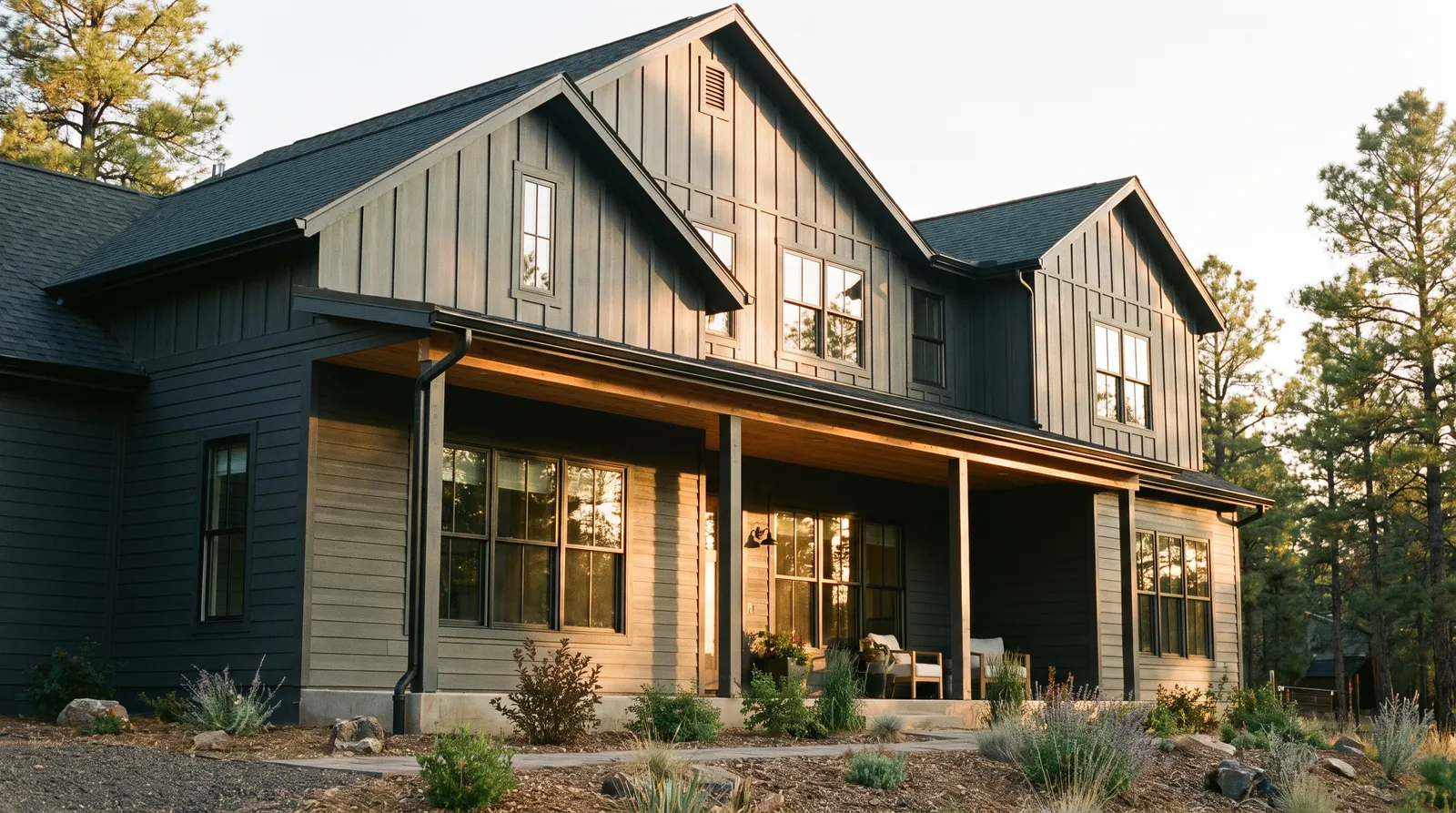
Done right, it changes the look of a house completely, from desert block to modern farmhouse or clean contemporary, without touching the structure.
The details that make or break siding
Fiber cement is only as good as the install. The failures we see on other jobs almost always come from the same few details:
- Ground clearance. Siding run down into soil or gravel wicks moisture. Hardie's instructions call for clearance from grade and from hardscape.
- Roof clearance and kickout flashing. Where a roof meets a wall, water needs to be diverted away, not into the wall.
- Unsealed cut edges. Field cuts should be sealed or primed per the instructions, especially in freeze-thaw country.
- Wrong fasteners or nailing. Overdriven nails and the wrong fastener spacing cause cracking and loose boards.
We follow the manufacturer's installation instructions on every wall, because that is what the product is tested and warranted to.
Northern Arizona and fire
In Prescott, Flagstaff and the forested parts of the Verde Valley, freeze-thaw and wildfire matter as much as heat. Fiber cement handles freezing well when installed with the right clearances and sealed cut edges. It is also noncombustible, which is one reason it is popular in wildland areas. Stucco is fire resistant too. Both are good choices compared to wood siding in fire country.
Cost
For James Hardie siding, our draft range is $14 to $28 per square foot of wall, installed. That includes the weather barrier, trim, flashing and finish, and it varies with the product style, the number of windows and doors, the height of the walls, and whether we are going over block or framing. A typical home with about 2,000 square feet of wall area would run roughly $28,000 to $56,000. Our siding and exterior projects overall run $25,000 to $150,000, depending on size and scope. See our siding cost page for more detail.
Stucco repair and a new color coat usually cost less up front than converting to siding. If your stucco is sound and you like it, repairing it is often the right call, and we will tell you so. Siding makes the most sense when you want a different look, when the existing stucco has chronic cracking or water problems, or when you are already doing an addition or major exterior remodel.
As with every project, you get Good, Better and Redeemed options. Good might be lap siding on the most visible elevations. Better might wrap the whole house with factory finish. Redeemed might combine lap, board and batten and tongue-and-groove soffits for a full exterior transformation. Each tier is a fixed price. Jesus told us to "sit down and count the cost" (Luke 14:28), and three clear options make that easier.
Maintenance
- Stucco: seal cracks as they appear, keep sprinklers off the walls, recoat or repaint periodically as the color fades.
- Fiber cement: wash it occasionally, check caulked joints every few years, and repaint when the finish fades. Factory finishes typically go longer between repaints than site-painted ones.
Neither is maintenance-free. Both are low-maintenance compared to wood.
So which one?
If your stucco is in good shape and you like the look, keep it and maintain it. If you want a new look, have recurring stucco problems, or live where fire and freeze matter, Hardie is worth a serious look. We are happy to give you an honest answer either way. Call us for a ballpark, and Torin will walk your walls with you.
Related questions
Can you install James Hardie siding over a block home in Arizona?
Yes. We install a weather barrier and furring strips anchored into the block, extend the window and door trim, and hang the siding to James Hardie's installation requirements with flashing at every opening.
How much does Hardie siding cost in Arizona?
Our draft range is $14 to $28 per square foot of wall, installed, depending on the product, wall height, openings and whether the house is block or framed. Our siding and exterior projects overall run $25,000 to $150,000.
Does Hardie siding hold up in Arizona heat?
Yes. Fiber cement is dimensionally stable and does not melt or warp like vinyl. Paint fades in strong sun on any material, so a factory finish and lighter colors help it look newer longer.
Can Hardie siding be installed during monsoon season?
Yes, with care. James Hardie advises against installing wet product, so we schedule around storms, keep materials covered and dry, and pause rather than install wet siding.
Start Your Project
Let's Build Something That Lasts.
Call, text or send a few details. Torin will get back to you with an honest ballpark, usually the same or next business day.
Related reading
Last updated October 2026 · Written and reviewed by Torin Stansbury, owner of Redeemed Builders · Licensed Arizona KB-1 General Contractor, AZ ROC #365545